Since 1 January 2026, the Carbon Border Adjustment Mechanism (CBAM) has entered its definitive regime.
This European regulation applies to certain goods imported from countries outside the European Union, notably steel, aluminium and cement.
For the companies concerned, it introduces new obligations for monitoring and reporting carbon emissions, and for purchasing certificates from 2027 onwards.
Which products are concerned? How does the 50-tonne threshold work? And what steps should importers anticipate?
What is CBAM?
The Carbon Border Adjustment Mechanism aims to apply a carbon cost to imports comparable to that borne by European producers subject to the EU Emissions Trading System (EU ETS).
Its objective is to limit the risk of "carbon leakage". This phenomenon occurs when companies relocate their production to countries with less stringent environmental constraints, or when imports replace products manufactured in Europe under more demanding regulatory conditions.
CBAM thus takes into account the greenhouse gas emissions generated during the manufacture of certain goods.
Unlike a traditional customs duty, CBAM does not automatically apply to all imports. Its scope depends on the type of product and its customs classification.
Which imported products are concerned in 2026?
CBAM currently covers certain goods belonging to six sectors:
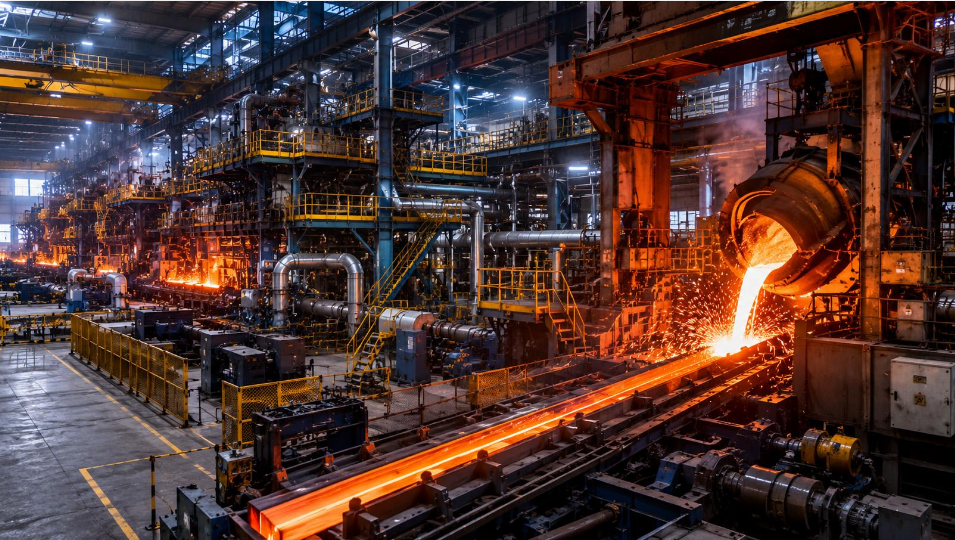
Iron and steel: steel products and certain processed articles.
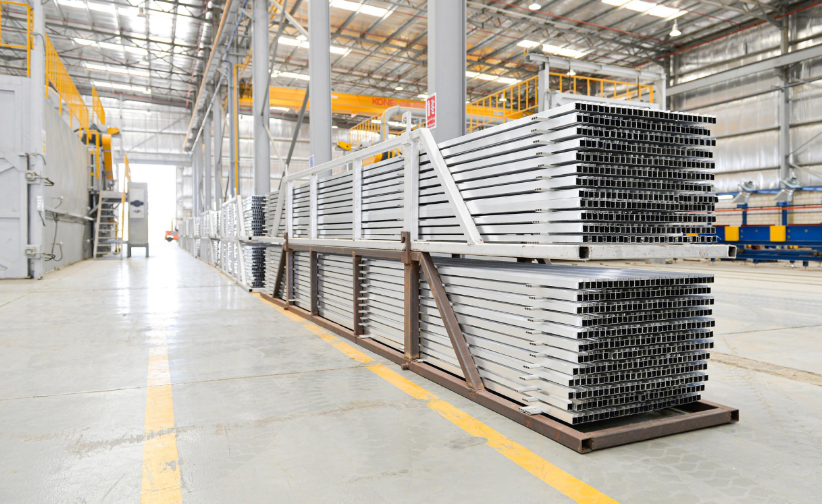
Aluminium: raw aluminium and certain derived products.
Cement: several categories of cement.
Fertilisers: certain fertilisers and associated products.
Hydrogen.
Electricity.
Please note: not all products containing these materials are automatically concerned.
For example, a piece of furniture with a metal frame is not necessarily subject to CBAM. However, certain aluminium profiles or steel articles may fall within the scope of the regulation.
The determining criterion is the Combined Nomenclature (CN) code used to identify the goods at import.
Before placing an order, the importer must therefore check whether the customs code of their product is among those covered by the regulation.
What changes with the definitive CBAM regime
Between October 2023 and December 2025, CBAM operated under a transitional regime, mainly dedicated to reporting emissions associated with imported goods.
Since January 2026, the definitive regime introduces new obligations for the companies concerned.
The annual 50-tonne threshold
The regulation provides an exemption for importers whose cumulative net mass of CBAM goods does not exceed 50 tonnes per calendar year.
This threshold is assessed on all imports of the company concerned by this rule, not order by order.
However, there are two exceptions: electricity and hydrogen do not benefit from this exemption.
A company that places several small orders must therefore carefully monitor its import volumes. If the annual total exceeds 50 tonnes of goods covered by the scheme, it must comply with the obligations of the definitive regime.
The status of authorised CBAM declarant
Companies subject to the scheme must hold the status of authorised CBAM declarant, or, depending on their situation, use an indirect customs representative holding this authorisation.
The status is issued by the competent authority of the Member State concerned.
This step is essential to be able to continue imports falling within the scope of the definitive regime.
The first deadlines in 2027
CBAM certificates will be sold from February 2027, including to cover emissions of goods imported in 2026.
The first declarants concerned must submit their annual declaration and surrender the corresponding certificates by 30 September 2027 at the latest.
This declaration will cover in particular the quantities imported, the emissions embedded in the products and the adjustments provided for by the regulation.
What impact on import costs?
CBAM can lead to additional expenses for the importers concerned.
Unlike customs duties, its cost does not depend directly on the value of the goods. It is mainly based on the carbon emissions generated during their manufacture and the price of CBAM certificates.
Several factors enter into the calculation:
The quantities imported;
The emissions associated with their manufacture;
The price of CBAM certificates;
The adjustments related to free allowances granted to European producers;
The carbon price possibly already paid in the country of production.
The price of certificates is linked to that of allowances on the European carbon market. For emissions associated with imports in 2026, the reference is calculated on the basis of a quarterly average.
There is therefore no single CBAM rate applicable to all imports.
Two manufacturers offering comparable products can indeed have very different emission levels, and therefore lead to different CBAM costs.
To correctly assess the profitability of an order, it becomes essential to integrate this regulatory cost into the overall cost of import.
This analysis should also be carried out alongside the comparison of commercial terms. Our article on the main Incoterms explains how to distinguish the costs and responsibilities provided for in EXW, FOB, CIF or DAP offers.
What information to request from suppliers in Asia?
For any goods falling within the scope of CBAM, the importer must be able to obtain from their supplier the information necessary for monitoring and reporting emissions.
The importer must in particular verify:
1. The identity of the manufacturer and the production site. A trading company may sell products manufactured by another company. It is therefore important to precisely identify the factory and industrial installation at the origin of the production.
2. The customs classification. The CN code determines whether the goods fall within the scope of CBAM.
3. The planned quantities. The net weight of the goods must be monitored to control compliance with the annual 50-tonne threshold.
4. The embedded emissions. Depending on the applicable rules, declarations may be based on default values published by the European Commission or on verified actual data.
5. Evidence of a carbon price already paid. These may be necessary to benefit from the deductions provided for by the scheme.
Warning: a simple declaration from the supplier stating that their production is "low carbon" does not constitute sufficient proof.
The ability to provide reliable and traceable information therefore becomes an additional criterion in the selection of industrial partners.
To understand why it is important to know the actual manufacturer of the products being imported, see our comparison between factory and trading company.
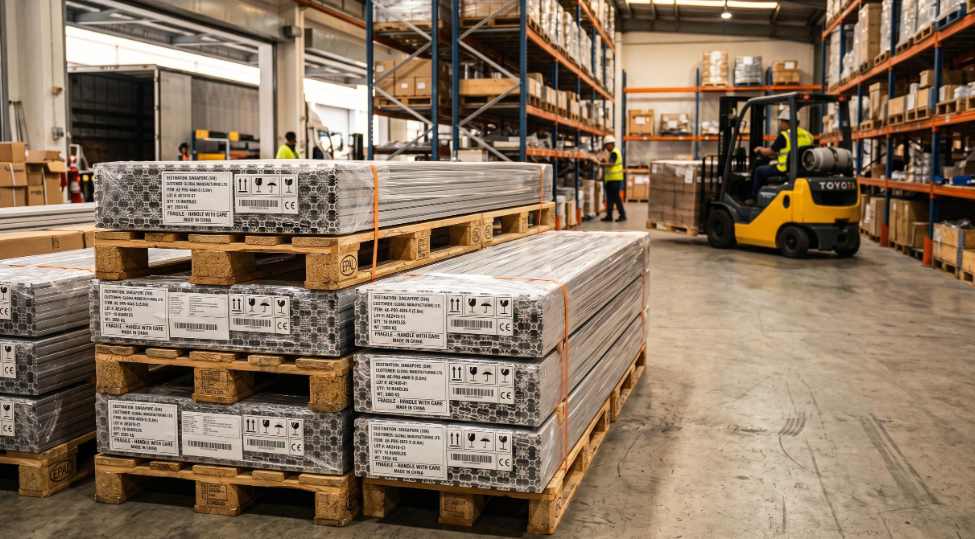
Concrete example: importing aluminium profiles from China
Let us take the fictitious case of a French company importing aluminium profiles from a Chinese manufacturer.
It plans to purchase 65 tonnes of goods in 2026.
If the customs codes of the profiles fall under CBAM and no other exemption applies, its annual volume exceeds the regulatory threshold.
The company must then:
Hold the required declarant status;
Precisely identify the factory that manufactures the profiles;
Collect the data necessary for calculating emissions;
Prepare its annual declaration;
Anticipate the purchase of CBAM certificates in 2027.
Conversely, if the customs codes of the imported goods are not among those covered by the scheme, their aluminium composition is not sufficient to subject them to CBAM.
This example illustrates the importance of verifying the customs classification before assessing the regulatory cost of an import.
This is not a real cost calculation: it would depend in particular on the declared emissions and the various applicable adjustments.
How to prepare imports for 2027?
Companies concerned have every interest in anticipating these new obligations from the preparation of their orders.
Five actions are priorities:
1. Identify the products concerned.
Check the customs codes of each imported reference to determine whether it falls within the scope of CBAM.
2. Monitor annual volumes.
Centralise imported quantities to control compliance with the regulatory threshold of 50 tonnes.
3. Clarify responsibilities.
Determine who acts as importer, CBAM declarant or indirect customs representative.
4. Collect data from factories.
Anticipate exchanges with manufacturers regarding their industrial installations, emissions generated and necessary supporting documents.
5. Prepare for the 2027 deadlines.
Integrate declarations and the purchase of certificates into the company's administrative and financial monitoring.
These steps complement the usual stages of industrial sourcing, without replacing other necessary controls.
Pre-shipment quality inspections, for example, verify the conformity of manufactured products. CBAM, for its part, mainly concerns the emissions embedded in goods and the associated reporting obligations.
Conclusion: anticipate CBAM from the preparation of purchases
With its entry into the definitive regime in 2026, CBAM introduces new responsibilities for European importers of industrial goods concerned.
Identifying products subject to the regulation, monitoring imported volumes and collecting the right information from manufacturers become essential steps to prepare for the 2027 obligations.
The choice of a supplier must therefore no longer rely solely on its industrial capabilities, prices and manufacturing quality. Its transparency and ability to transmit reliable data also become important criteria.
Are you considering developing your industrial purchases in Asia?
Diex International supports you in finding and evaluating suppliers suited to your project.
Study the feasibility of your sourcing project.
Frequently asked questions
Does CBAM apply to all imports from China?
No. It applies only to goods covered by the regulation, according to their customs classification. The country of origin is not sufficient to determine its application.
Does a company importing less than 50 tonnes need to buy certificates?
Goods benefiting from the annual 50-tonne exemption are not subject to CBAM obligations as long as this threshold is not exceeded. Electricity and hydrogen are exceptions.
When must emissions from 2026 imports be declared?
For the declarants concerned, the first annual declaration must be submitted by 30 September 2027 at the latest, with the surrender of the corresponding certificates.