Finding suppliers in China may seem simple at first glance. Between B2B platforms, trade shows, and online searches, it's now possible to quickly identify companies.
But the real challenge begins once the suppliers are identified.
Are they really manufacturers? Do their factories have the necessary equipment and capabilities? Can they handle the requested volumes? Are their prices competitive? How can you guarantee that mass production will match the approved samples? And most importantly, who will monitor production and perform quality controls before shipment?
This is precisely where a sourcing agent in China comes in.
Their role isn't limited to providing a list of contacts. A good sourcing agent supports the company at every stage of the project: supplier research and selection, negotiation, product development, production monitoring, quality control, and logistics coordination.
But not all sourcing agents offer the same services or the same level of support.
Here are the main criteria to consider when choosing a reliable sourcing partner suited to your project.
What is the role of a sourcing agent in China?
A sourcing agent in China acts as an intermediary between a buying company and local suppliers. Their role is to facilitate purchasing, secure supplies, and support the company throughout its project.
Depending on the needs, their missions can cover several stages, from supplier research to production monitoring and shipment of goods.
1. Research and pre-select suppliers
The first mission is to identify suppliers that match the specifications.
This research is based on several criteria:
The type of product and materials sought;
Volumes and minimum order quantities (MOQ);
Customization possibilities;
Target prices and production lead times;
Certifications and technical requirements;
The supplier's export experience.
The goal is not simply to pass along a long list of contacts, but to build a selection of suppliers truly suited to the project, both technically and commercially.
Platforms like Alibaba can be a starting point to identify available products and offers. However, they do not replace genuine sourcing, verification, and supplier qualification work.
To better understand their limitations, see our article Buying on Alibaba: What are the advantages and risks?.
2. Verify and qualify suppliers before ordering
Identifying a supplier is not enough to guarantee their reliability. Before entering a collaboration, it is essential to verify their seriousness, industrial capabilities, and ability to meet the project requirements.
This qualification is based on several elements:
Legal identity: legal existence, registration, and actual activity of the company;
Experience: longevity, product references, and experience in the relevant sector;
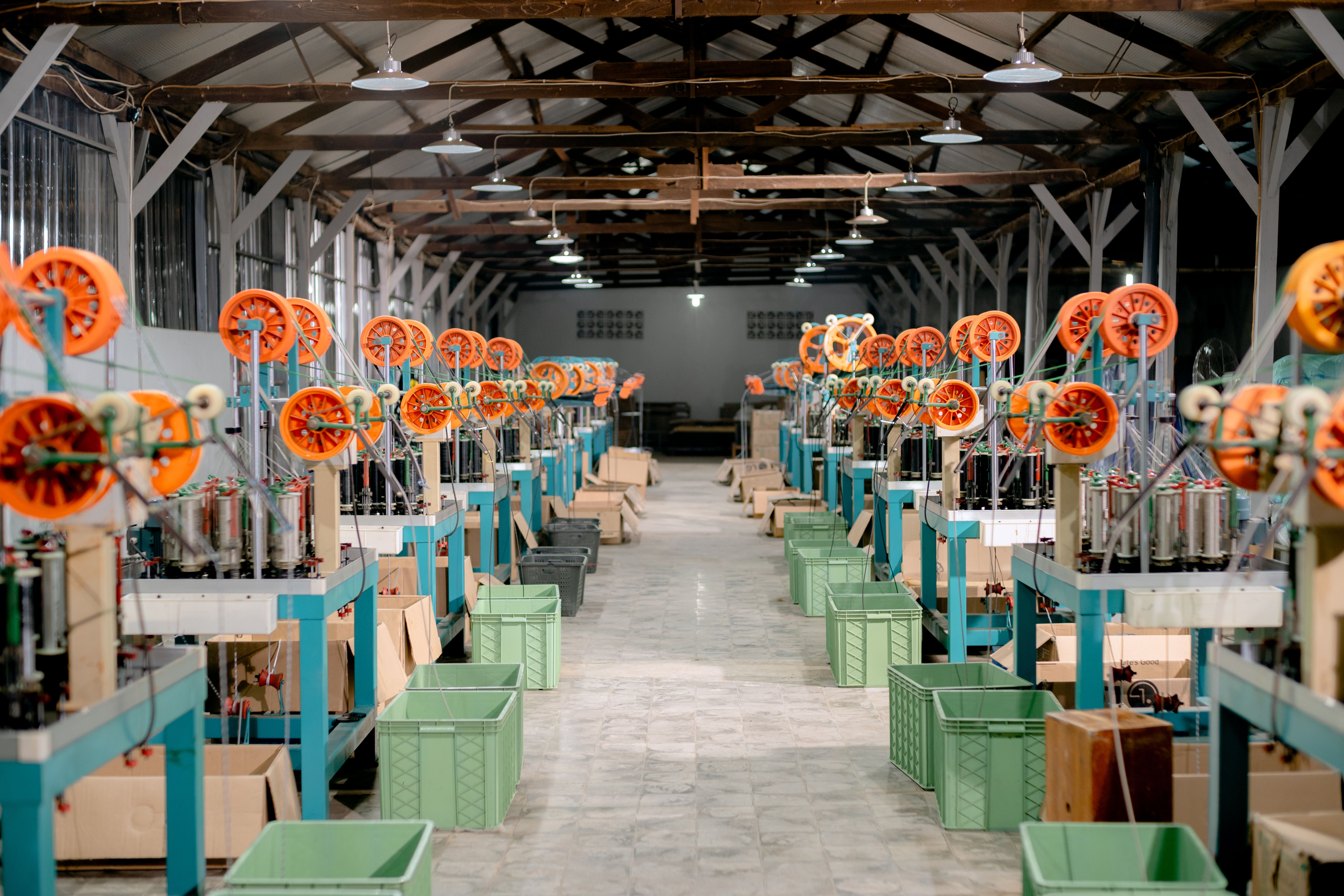
Industrial capabilities: equipment, production volumes, and manufacturing processes;
Certifications: compliance with applicable standards and product requirements;
Quality organization: control procedures and production monitoring.
its quality organization.
It is also necessary to determine whether the contact is a factory, a trading company, or another intermediary.
This distinction does not automatically imply that a factory is better than a trading company. A trading company can be relevant depending on the product and volumes. The important thing is to know who actually manufactures the goods and to maintain sufficient visibility over the supply chain.
To delve deeper into this step, see our article How to ensure the reliability of a Chinese factory before ordering?.
Once suppliers are pre-selected, a scoring phase based on a supplier evaluation matrix allows them to be compared objectively. By assigning a score to each supplier based on weighted criteria (price, quality, production capacity, lead times, certifications, communication, etc.), it becomes easier to identify the partners best suited to the project and to justify the final selection.
For major projects, a factory visit or independent audit also makes it possible to verify on-site the equipment, organization, and actual capabilities of the manufacturer, beyond the information provided by the supplier.
3. Negotiate prices and commercial terms
A sourcing agent also intervenes in negotiation.
But negotiating does not mean only seeking the lowest unit price.
Negotiation must take into account several elements:
prices and MOQ;
production lead times;
payment terms;
cost of molds or tooling;
packaging;
customization possibilities;
warranties and replacement conditions in case of defects;
transport conditions;
the proposed Incoterm.
A supplier price only makes sense if one precisely understands what it includes.
It is also essential to compare offers on an identical basis. An EXW price and a FOB price, for example, do not cover the same logistics services. Focusing only on the unit price can therefore distort the assessment of the real import cost.
To better understand these differences, see our article Understanding the main Incoterms which presents the differences between EXW, FOB, CIF, DAP, and DDP.
4. Manage samples and product development
For a customized product, supplier qualification generally continues with a sampling, prototyping phase.
This step is essential to verify product compliance with the specifications and to validate several elements:
materials;
dimensions and colors;
finishes;
product operation;
customization;
accessories;
packaging.
Several prototypes or adjustments may be necessary before obtaining a sample that meets expectations.
The sourcing agent then plays a coordination role between the client and the manufacturer. They must accurately transmit the requested modifications, monitor their implementation, and verify their proper application.
This step is particularly important for technical products or those requiring extensive customization.
Once approved, the final sample, often called the Golden Sample, becomes the quality reference for mass production. It serves as a basis for quality controls to verify that manufactured products match the approved model.
5. Ensure production monitoring
Once the order is placed, the sourcing agent's role does not stop. Production monitoring is an essential step to guarantee compliance with deadlines, quantities, and quality requirements.
The agent must notably ensure that the factory respects:
The schedule: production progress and adherence to agreed deadlines;
Quantities: conformity of manufactured volumes with the order;
Materials: use of approved materials and components;
Technical specifications: compliance with the specifications and the Golden Sample;
Customizations: proper application of modifications approved during sampling.
Regular monitoring also allows anticipating delays and quickly detecting potential manufacturing issues.
For example, identifying a defect after producing 500 units does not have the same consequences as discovering it after 20,000 pieces have been manufactured.
A good sourcing agent must therefore maintain regular communication with the factory, inform their client of progress, and quickly coordinate necessary corrective actions in case of problems.
6. Organize quality controls
Quality control is an essential step to secure purchases in China and ensure that manufactured products meet the client's requirements.
Even when a company works with a trusted supplier, it remains important to verify the goods before shipment.
Depending on the product nature, volumes, and identified risks, several types of inspections can be performed:
pre-production inspection (PPI);
during production inspection (DPI);
final random inspection (FRI);
loading inspection (CLI).
At DIEX International, we recommend at least a final inspection before shipment, to verify quantities, dimensions, appearance, operation, packaging, and product conformity with the specifications.
For large orders, technical products, or manufacturing with particular risks, several inspections may be necessary at different stages of production.
To delve deeper into this subject, see our article the different types of quality control: PPI, DPI, FRI, and CLI which explains the role of each inspection and when to perform them.
7. Prepare and coordinate shipment
Once production is complete and quality controls are validated, the sourcing agent can also support the logistical preparation of goods to ensure shipment under the best conditions.
This can include:
verification of packaging;
quantity control;
carton marking;
consolidation of multiple orders;
coordination with the freight forwarder;
document preparation;
loading control.
However, it is necessary to distinguish the role of the sourcing agent from that of the freight forwarder.
The sourcing agent mainly intervenes in supplier management, production monitoring, and quality control. The freight forwarder, on the other hand, specializes in organizing international transport and associated logistics formalities.
The sourcing agent thus ensures coordination between the supplier, the freight forwarder, and the client, to facilitate exchanges, anticipate potential problems, and guarantee a smooth shipment within the agreed deadlines.
What criteria should you check to choose a sourcing agent in China?
Not all sourcing agents offer the same services, working methods, or levels of support.
Before entrusting your project, several essential criteria must be evaluated to guarantee effective and secure sourcing.
1. A genuine local presence
Having an on-the-ground presence in China is necessary to ensure effective supplier monitoring.
A local contact can more easily:
meet suppliers;
visit a factory;
organize an inspection;
resolve a difficulty on-site;
understand local business practices.
But having an office in China is not enough. The value of an agent comes mainly from their ability to combine on-the-ground presence, sourcing methodology, and understanding of the client company's needs.
2. Experience adapted to the product
Sourcing a piece of furniture, a textile, an electrical device, or a highly customized product does not require the same expertise.
A good agent must understand the constraints related to the product:
materials;
manufacturing processes;
tolerances;
quality requirements;
packaging;
testing;
regulatory requirements applicable to the destination market.
This expertise allows them to ask the right questions to manufacturers, assess project feasibility, and identify the most suitable suppliers.
3. A diversified and relevant supplier network
A supplier network developed over the years is a real asset. It allows faster access to qualified manufacturers, facilitates exchanges, and sometimes benefits from better commercial conditions.
However, the existing network must not limit research.
A sourcing agent should not systematically propose the same manufacturers out of habit or convenience. They must be able to broaden their research and compare different solutions.
The choice of supplier must always be guided by the client's specifications, not by the agent's business relationships.
4. A rigorous supplier qualification methodology
A serious sourcing agent must be able to clearly explain their method for researching, qualifying, and selecting suppliers.
It is particularly important to understand:
How manufacturers are identified;
How their identity and activity are verified;
How their industrial capabilities are assessed;
What criteria are used to compare offers;
How suppliers are scored and selected;
In which cases a factory visit or audit is recommended.
The use of a supplier scoring matrix, based on weighted criteria such as price, quality, lead times, and production capacity, allows for objective comparison of different offers.
For projects with significant stakes, a Factory Verification Audit can notably verify directly the capabilities, equipment, and organization of a factory before launching production.
5. Transparency on suppliers and costs
Transparency is an essential criterion for establishing a trusting relationship with a sourcing agent.
Before committing, make sure you clearly understand:
who manufactures your product;
where the factory is located;
what services are performed by the agent;
how suppliers were selected;
how much the support costs;
what additional fees may apply.
An agent who refuses to communicate the identity of the factories or who remains vague about their remuneration can create a dependency that is difficult to manage in the long term.
The goal is to maintain sufficient visibility over your supply chain and to precisely understand the costs and responsibilities of each party involved.
6. Ability to support the project from A to Z
The added value of a sourcing agent also lies in their ability to ensure continuity between the different stages of the project.
Supplier research, negotiation, sampling, product development, production monitoring, quality control, and logistics must be coordinated effectively.
For example, a technical modification approved during sample development must be integrated into the specifications, communicated to the manufacturer, and then verified during quality controls.
This continuity helps limit errors, avoid information loss, and better anticipate problems.
A good sourcing agent therefore does not just find a manufacturer: they support and coordinate the entire project to secure each stage of the supply chain.
How is a sourcing agent remunerated?
There are several remuneration models for a sourcing agent in China. None is systematically better than another: it all depends on the nature of the project, volumes, and the desired level of support.
The key is to precisely understand the services included, the costs, and any additional fees.
1. Commission on orders
The agent receives a percentage calculated on the value of purchases made from suppliers.
This model is particularly common for projects requiring regular support or recurring orders.
Before committing, check the commission rate, the calculation basis, the services included, and any additional fees.
Comparing only commission percentages is not enough: you must evaluate the full range of services offered.
2. Fixed fee
The agent invoices a predefined amount for a mission or project.
This formula offers better budget visibility, especially for supplier research or a product development project.
However, it is essential to specify the scope of the mission: number of suppliers researched, sample management, negotiations, factory visits, quality controls, and duration of support.
3. Billing per mission
Some companies do not need full support but only a one-time intervention in China:
Supplier research and qualification;
Factory audit or visit;
Quality control;
Negotiation support;
Loading inspection.
Each service can then be billed independently.
This model is particularly suited to companies that already have suppliers but wish to benefit from expertise or a local relay to secure certain operations.
What mistakes should you avoid?
Choosing only the cheapest agent
A low commission or an attractive flat fee does not guarantee quality sourcing.
Supplier research, qualification, negotiations, and production monitoring require time, skills, and resources.
It is therefore preferable to compare the content and quality of services rather than focusing solely on price.
Multiplying intermediaries without understanding their role
A supply chain involving several intermediaries can make it more difficult to identify the manufacturer and manage the project.
This situation can notably complicate negotiations, technical modifications, quality controls, and dispute resolution.
It is therefore important to understand the role of each party and to know who actually manufactures the products.
Neglecting cultural and linguistic differences
Differences in language, culture, and business practices can represent a real obstacle in a sourcing project in China.
Working with an agent who has limited English or who is not used to collaborating with foreign companies can lead to misunderstandings, communication errors, and difficulties in project monitoring.
It is also important to favor an agent who knows the requirements of the European market, particularly in terms of quality, certifications, regulations, and commercial expectations.
A good sourcing agent must therefore be able to bridge the gap between Chinese industrial practices and the expectations of European companies.
At DIEX International, we specialize in supporting European companies, with teams present in Europe and Asia. This dual presence allows us to facilitate intercultural exchanges, limit misunderstandings, and ensure smooth communication between our clients and Asian manufacturers.
Why choose Diex International for your sourcing in China?
At DIEX International, we believe that sourcing goes well beyond simply connecting a buyer and a manufacturer.
Our approach is based on a structured support adapted to the needs of each project, from defining specifications to shipment.
We intervene notably in:
Definition of needs and feasibility analysis;
Research, qualification, and comparison of suppliers;
Negotiation of prices and commercial terms;
Sample management and product development;
Production monitoring and quality controls;
Logistics coordination with suppliers and freight forwarders.
Our goal is to ensure continuity between each stage, facilitate exchanges with manufacturers, and enable our clients to make informed decisions based on concrete and verified information.
Because a supplier that is competitive on paper is only truly interesting if they can meet the specifications, volumes, deadlines, and expected quality level.
Do you have a sourcing project in China?
Before launching a full search, we suggest starting with a Sourcing Pre-study.
This first step provides an initial overview of available suppliers, minimum order quantities (MOQ), price levels, lead times, and the feasibility of your project.
The goal: to have the right information to select suitable suppliers and move forward confidently toward production.
Frequently asked questions
What is the role of a sourcing agent in China?
A sourcing agent in China supports companies in their purchases from local suppliers. Their missions can include researching and qualifying manufacturers, negotiating prices, managing samples, monitoring production, quality controls, and logistics coordination until shipment of goods.
How can you verify that a sourcing agent is reliable?
To choose a reliable sourcing agent, it is essential to evaluate their experience, local presence in China, knowledge of your sector, and supplier selection method.
Also check their transparency regarding manufacturers and costs, their ability to organize independent audits or quality controls, and their experience with European companies.
How much does a sourcing agent in China cost?
The cost of a sourcing agent depends on the type of product, ordered volumes, and the desired level of support.
There are several remuneration models: commission on orders, fixed fee, or billing per mission.
Beyond the rate, the key is to compare the services included, any additional fees, and the added value of the proposed support.