An effective promotional product does more than just display a logo. It has to make people want to keep it, use it, or collect it.
That is exactly what makes the custom plush keychain particularly interesting for brands. Compact, easily recognizable, and fully customizable, it turns a mascot, an iconic product, or a graphic element into a real object.
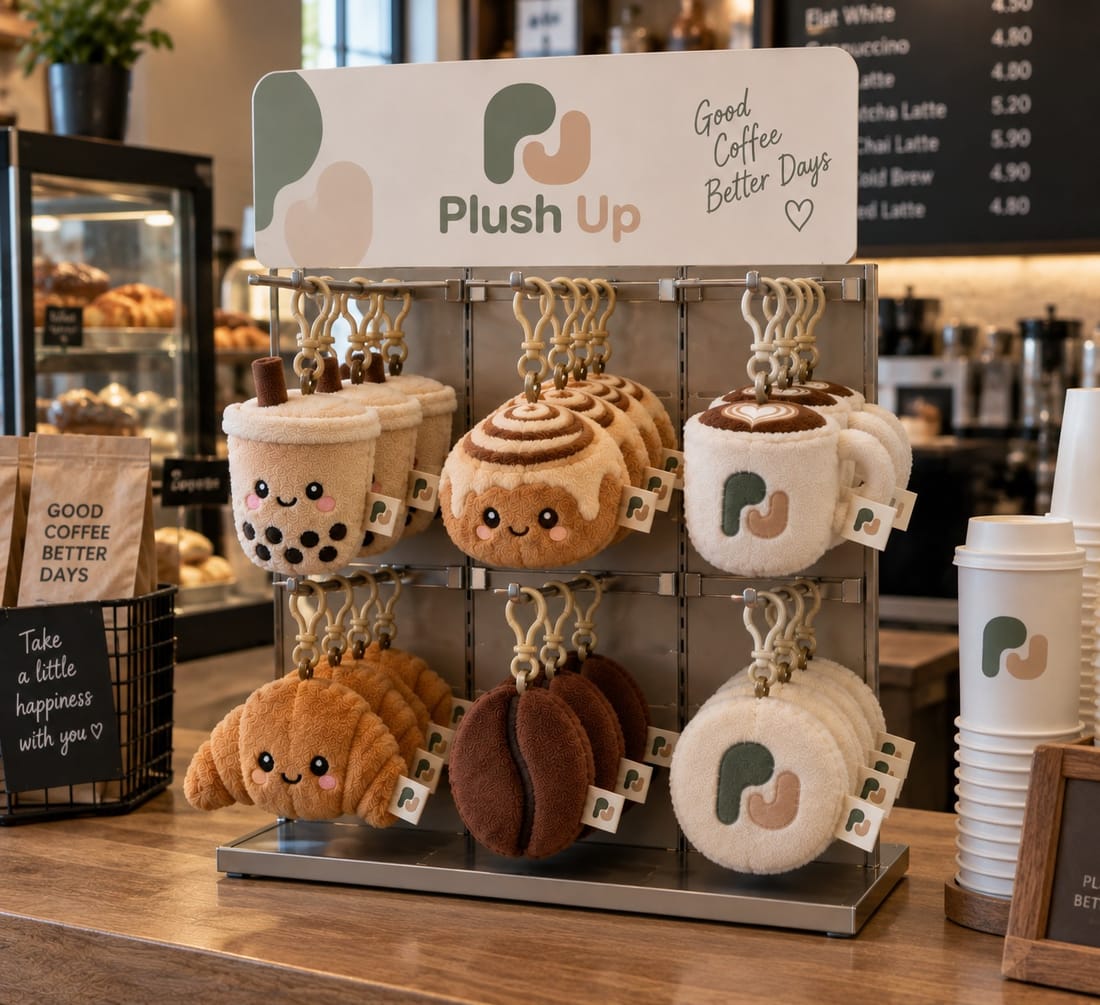
A bakery can thus create a miniature version of its signature croissant, a coffee shop its cup, a restaurant one of its signature dishes, or a sports club its mascot.
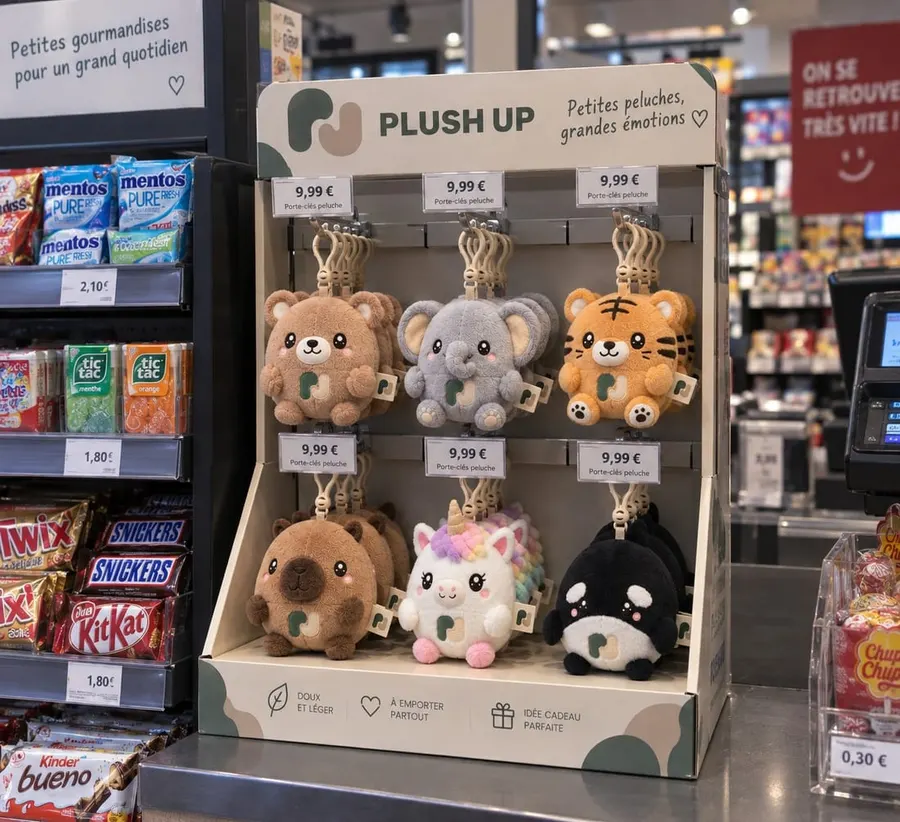
This approach is at the heart of Plush Up, a new business specializing in the development and manufacturing of custom plush keychains for brands.
When brand identity becomes an object
Most promotional items use an existing medium to which a graphic identity is added: a logo on a tote bag, a print on a water bottle, or branding on a pen.
With a custom plush keychain, the approach can be different.
The product itself becomes the expression of the brand.
A restaurant chain known for a specific dish or food can reproduce that food in miniature. A company with a mascot can turn it into a physical object. A brand whose identity relies on a strong shape or symbol can start directly from that element.
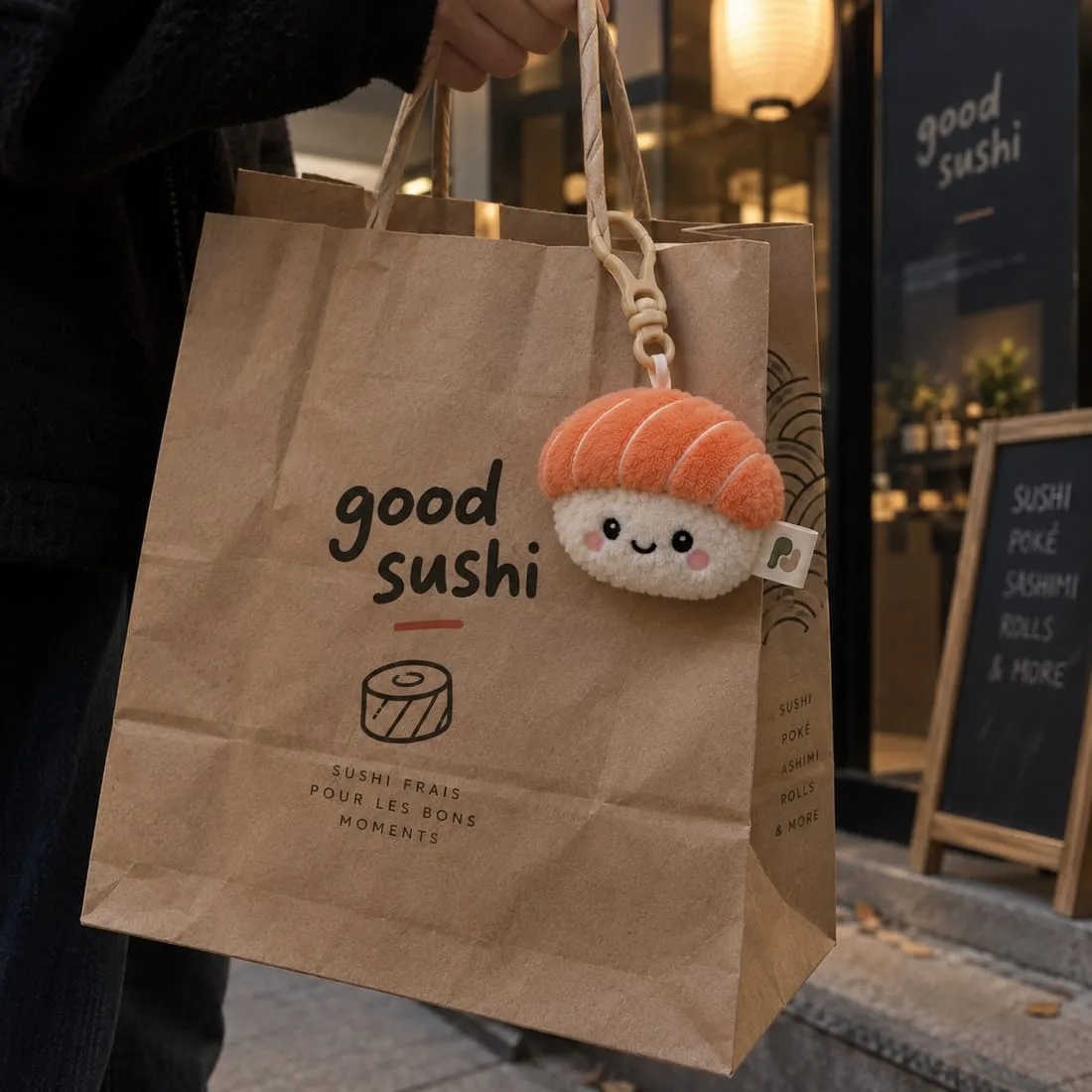
The goal is therefore not necessarily to print the logo as visibly as possible. A coherent combination of shape, colors, embroidery, label, and graphic details can be enough to make the object recognizable.
This approach also opens the door to variations in several models. A restaurant brand can, for example, turn three items from its menu into three different keychains. The customer no longer just receives or buys a promotional item: they can try to complete a collection.
Why the format lends itself well to merchandising
For a promotional product to work, its design matters as much as its function.
A plush keychain remains small enough to go with keys, a handbag, or a backpack, while offering more creative possibilities than a classic keychain.
This allows for several uses.
A brand can sell it directly as a promotional product. Another can give it away as part of a loyalty program, a launch, an event, or a commercial campaign. It can also serve as a souvenir associated with a place: hotel, park, gym, cinema, festival, or club.
The same principle can therefore be adapted to very different sectors: bakeries, coffee shops, restaurants, retail brands, e-commerce, leisure, sports, or hospitality.
But the product must remain consistent with the audience it is intended for.
Take the example of a coffee shop chain with an instantly recognizable cup. It could develop a mini plush version and offer it for sale at the counter. A gym with a mascot could instead reserve its model for new subscribers or a special event.
The design and function of the product are identical, but the marketing objective is not the same. This point should ideally be defined before design even begins.
Embroidery, colors, label: where does customization really happen?
Customization does not stop at the overall shape.
Embroidery makes it possible to reproduce eyes, a symbol, text, or graphic details without multiplying added parts. Fabric colors can match the company's brand guidelines. The sewn label can carry the brand name or logo, while the attachment can also be chosen in a color consistent with the whole.
The essential question remains legibility.
On an object just a few centimeters tall, reproducing every detail of a real product can quickly make the design too complex. You have to select the elements the audience must identify immediately.
Imagine a bakery wanting to create a miniature croissant. There is no need to reproduce every layer of dough or every shade of baking. Its silhouette, a few embroidered lines, the right color, and a brand label can be enough.
This simplification also has an industrial benefit: a design meant to be manufactured is different from an illustration meant only to be viewed on a screen.
At Plush Up, different formats can be developed depending on the desired result, including flatter or three-dimensional models, with dimensions suited to the keychain format.
MOQ: why is a minimum production quantity required?
MOQ, or Minimum Order Quantity, refers to the smallest quantity accepted to start manufacturing.
For Plush Up projects, the announced MOQ is currently 1,000 pieces per model.
This threshold must be taken into account from the very start of marketing planning.
A custom keychain is not a standard product already available in stock. You have to create the pattern, define materials and colors, prepare embroidery, make a prototype, and then organize production of the approved model.
There is therefore development and preparation work before the series is even launched.
For a brand, the right question is not only: "Is 1,000 pieces a lot?" but rather: how will these 1,000 pieces be used?
Take a chain of 20 restaurants. An order of 1,000 units represents 50 keychains per location. If the product is sold or distributed over several weeks, this minimum quantity ultimately seems easy to reach.
Conversely, a company with a single point of sale and a small customer base will need to check that the volume truly matches its project before placing an order.
This reflection on quantities, budget, and feasibility is part of the elements to evaluate upstream of a sourcing project. Diex International's sourcing pre-study provides an initial overview of suppliers, prices, MOQs, and lead times before going further.
From idea to product: how is a plush keychain made?
Development usually starts with an idea, a logo, a mascot, a product, or a visual reference.
At Plush Up, the process presented is organized into four main stages.
1. Turn the idea into a design
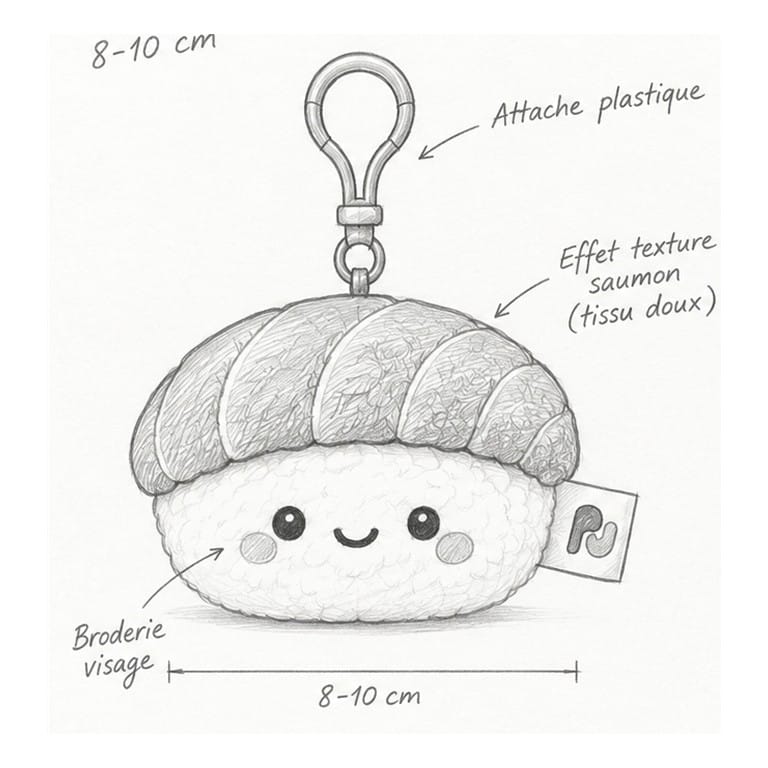
The first step is to determine the product's shape, proportions, colors, and the details that will be embroidered or sewn.
This is also the moment to simplify elements that are difficult to reproduce at a small scale.
The goal is to obtain a model that is recognizable, but also realistic to produce in series.
2. Make and adjust the prototype
Before production, a first physical sample is made.
Plush Up currently announces a lead time of about three weeks for the prototype. It can then be adjusted before approval.
This stage makes it possible to concretely check the shape, proportions, embroidery placement, materials, and finishes.
An element that works in a drawing may indeed need to be modified once it is turned into sewn and stuffed textile.
3. Launch series production
Once the prototype is approved, manufacturing can begin.
Depending on the design, various operations take place: cutting fabric pieces, embroidering details, assembly, sewing, stuffing, attaching the label, and fixing the attachment.
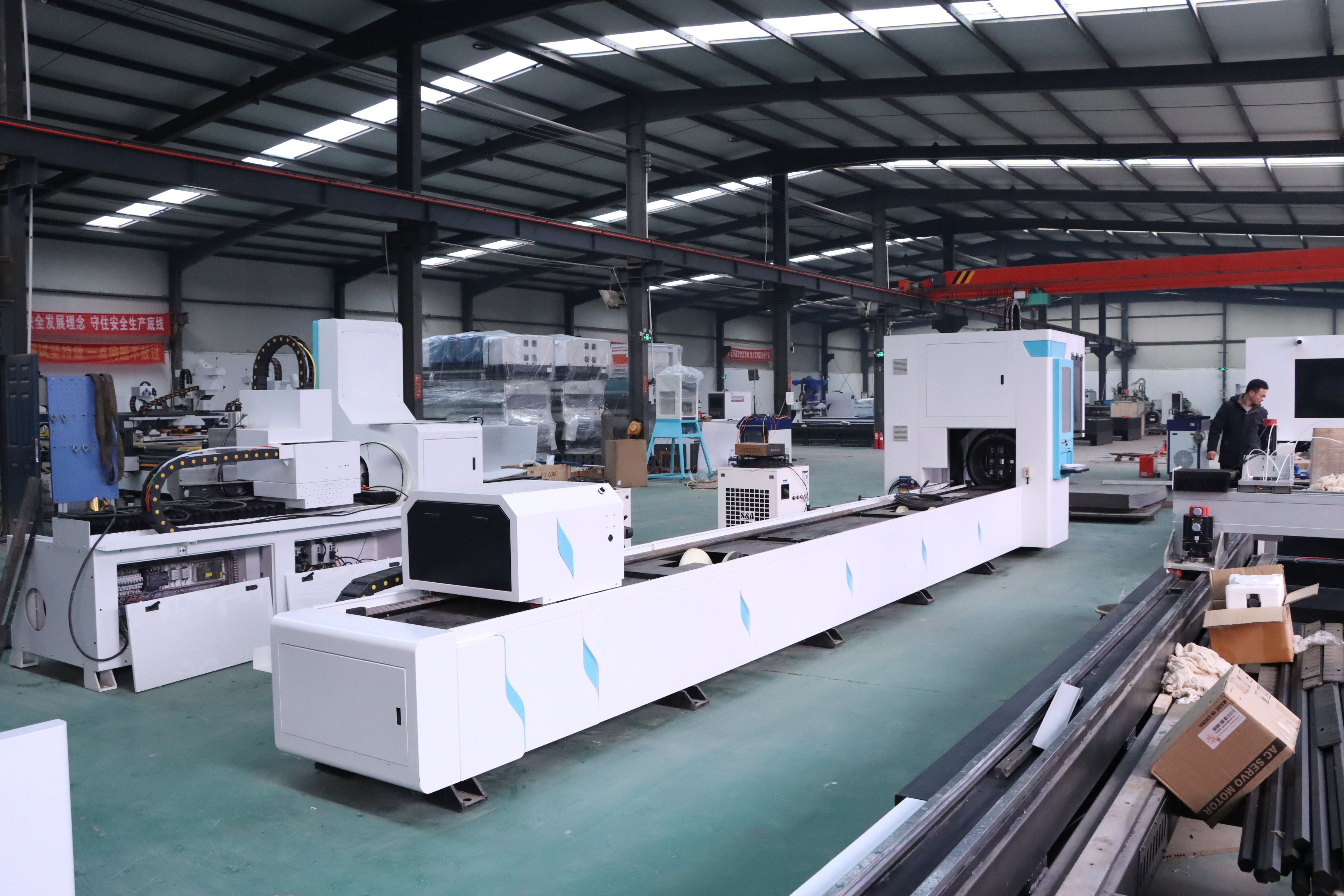
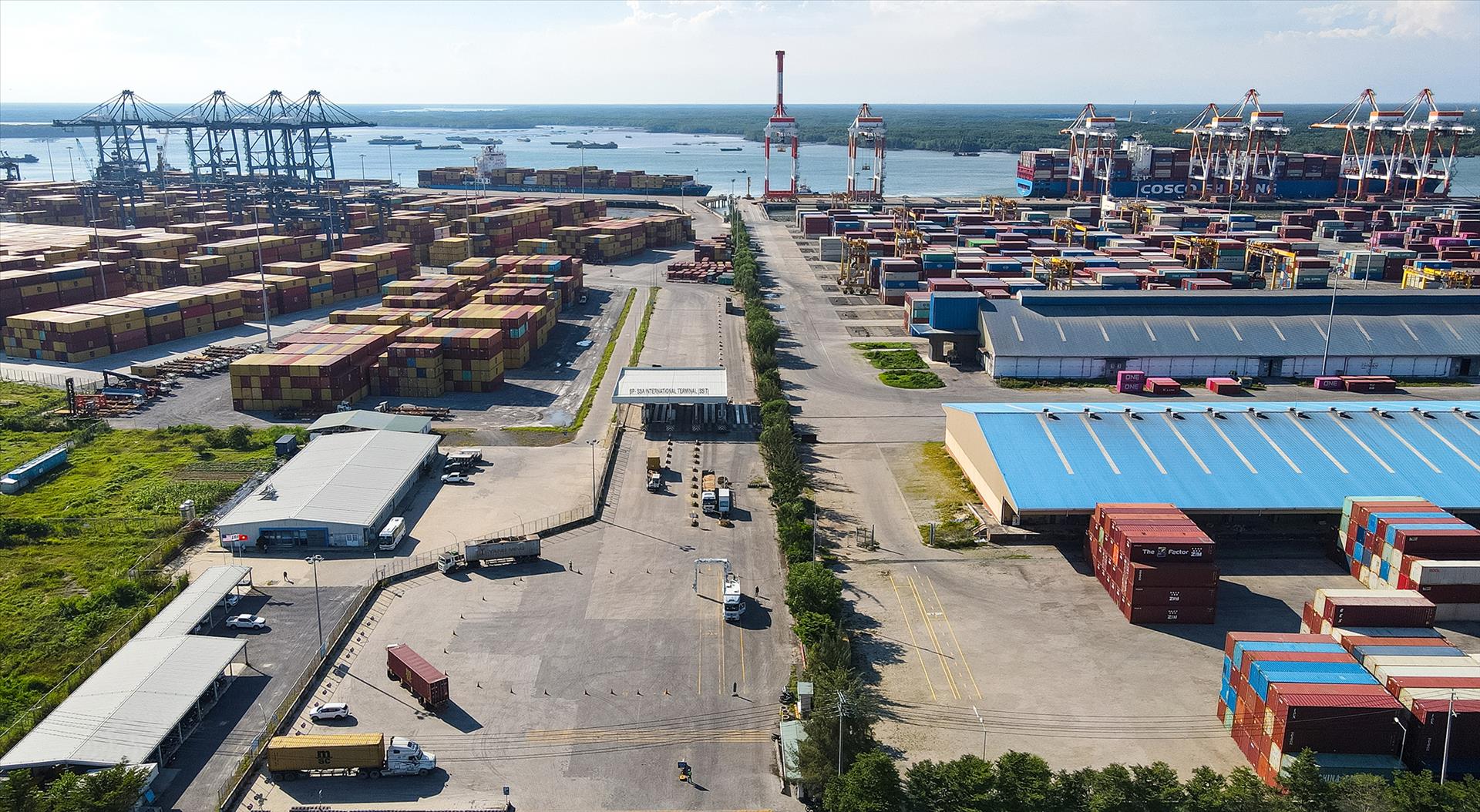
Plush Up works with several factories located in China, Vietnam, or Cambodia, depending on the project's characteristics and constraints.
However, choosing an industrial partner should not be based on price alone. Production capacity, technical expertise, consistency of finishes, and quality organization must also be taken into account.
Our article on the reliability of a Chinese factory before ordering looks more specifically at the points to check when a company selects a manufacturer.
4. Inspect before delivery
The mass-produced product must ultimately remain consistent with the approved model.
Dimensions, stitching, embroidery, colors, filling, label, and attachment are among the points that can be checked.
This monitoring becomes even more important when the product directly carries a brand's identity: an incorrect color, a misplaced embroidery, or an illegible label directly affects the final result, putting at stake the very image of the company or organization communicating through this object.
Designing a product the customer will really want to keep
The potential of the plush keychain ultimately does not rely solely on its cute or original character.
Its value comes from its ability to materialize a brand's world in a small object that the audience can keep, gift, buy, or collect.
Reflection should therefore begin with the company's identity and its audience, before talking about manufacturing.
Which product best represents the brand? What shape would be immediately recognizable? Should the keychain be sold, given away, or collected? How many units can actually be distributed?
By answering these questions before design, the plush keychain becomes more than just a promotional item.
Plush Up supports brands from the first idea to the prototype and then to series production. Discover customization possibilities and model examples on plushup.fr.
Frequently asked questions
What is the minimum order quantity?
Plush Up currently announces an MOQ of 1,000 pieces per model. The volume must be anticipated based on the number of points of sale, the distribution method, and the duration of the campaign.
Do you have to put your logo on the plush?
No. Identity can come through the shape, colors, embroidery, label, or attachment. An iconic product or a mascot can represent the brand without a large logo being placed in the center of the model.
Where can plush keychains be manufactured?
Plush Up states that it offers production in China, Vietnam, or Cambodia, depending on the project's characteristics, quantities, and manufacturing constraints.